A community plan for more affordable homes
and shared spaces in Stirchley
A Vision for Hazelwell Lane
Stirchley Community Plan is a proposed expansion of community-led housing and affordable retail and leisure on the high street.
We are proposing a development on the brownfield site owned by Aldi where McDonald’s planned to build a drive-through. The community told McDonald’s no and they withdrew their plans. Instead, we have collectively designed a community focused alternative.
A Community-Led Process
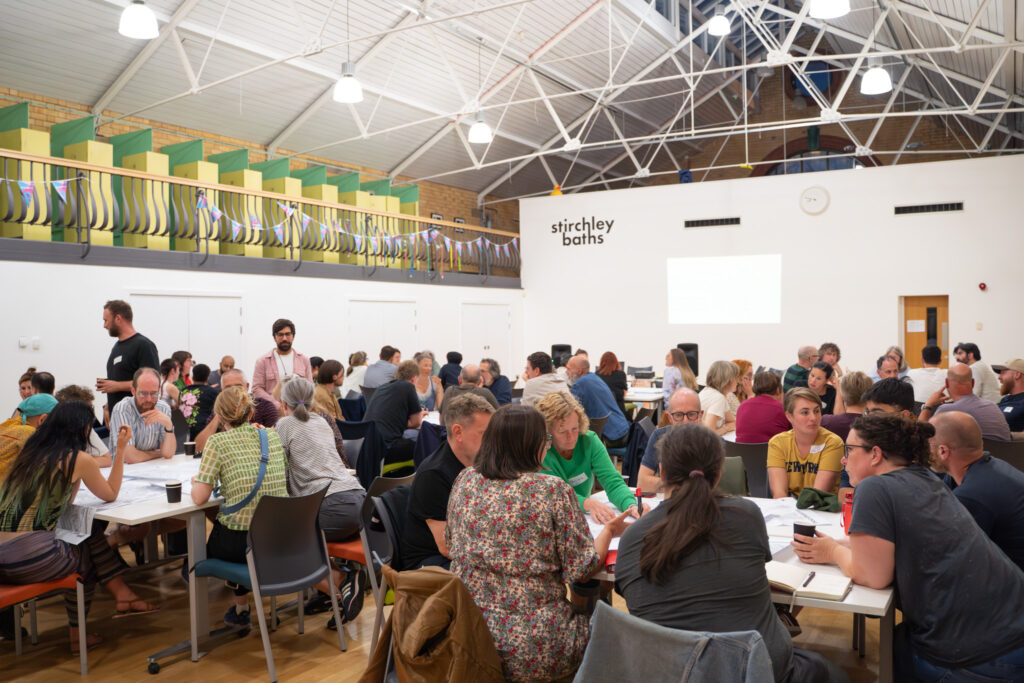
When Stirchley Co-operative opened applications for 20 flats, we received over 250 applications. This response showed just how urgent the need for genuinely affordable housing is in the area. One building alone cannot meet that demand.
To create the plan, Stirchley Co-operative hosted three open workshops with more than 150 Stirchley residents in late 2025.
These sessions were run in collaboration with Unit 38, architects who specialise in supporting communities to develop their own neighbourhood plans. Their previous work included supporting the campaign to Save Latin Village in Tottenham and working with Manchester Tenants Union to create a community-led alternative plan for an estate threatened by luxury student housing.
Together, participants explored what kind of housing, public spaces, and local businesses people want to see in Stirchley’s future.
Community residents were also encouraged to consider what had been lost – we talked about vital leisure facilities which have been lost and not replaced, from the bowling alley and Fitness First, to Tiverton Pool. Having leisure and retail which isn’t solely hospitality were issues residents thought were important. This plan attempts to incorporate these aspects.
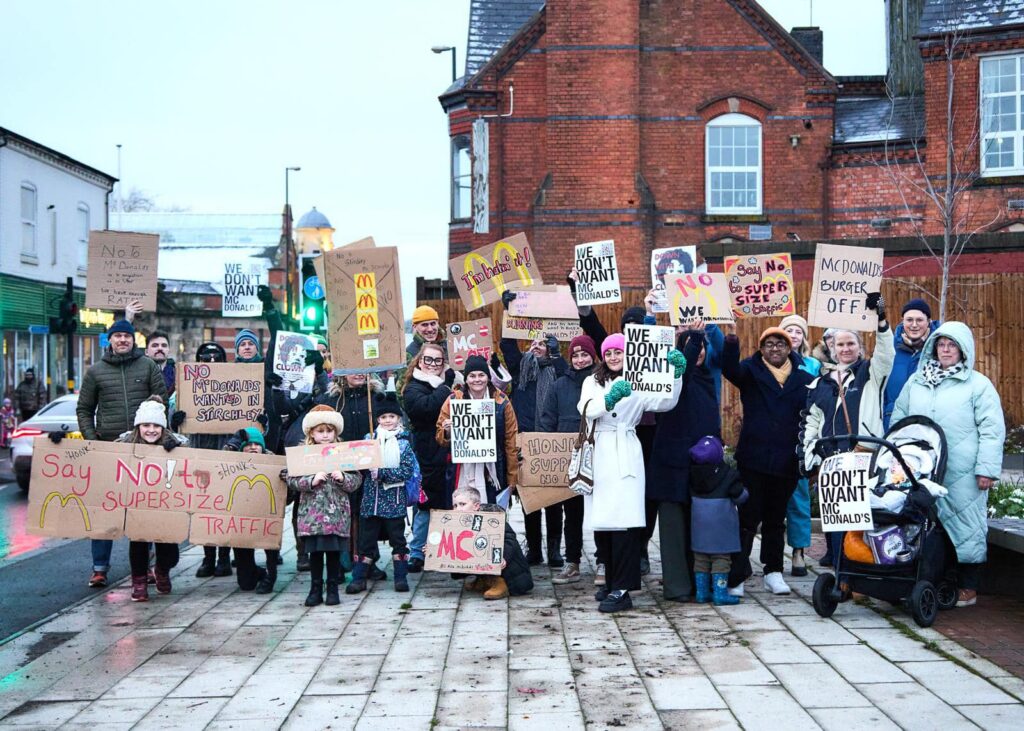
The site, in the heart of Stirchley next to Aldi and close to the new Stirchley Co-operative Development, has a connection down to the River Rea and is the last brownfield site available on the high street. It is located in front of the Stirchley United club building. We suggest a multi-functional, dense and quality scheme which plays to the desires the community has expressed and a much improved proposition to the McDonald’s which would have increased traffic with no real benefit to local residents.
About the Plan
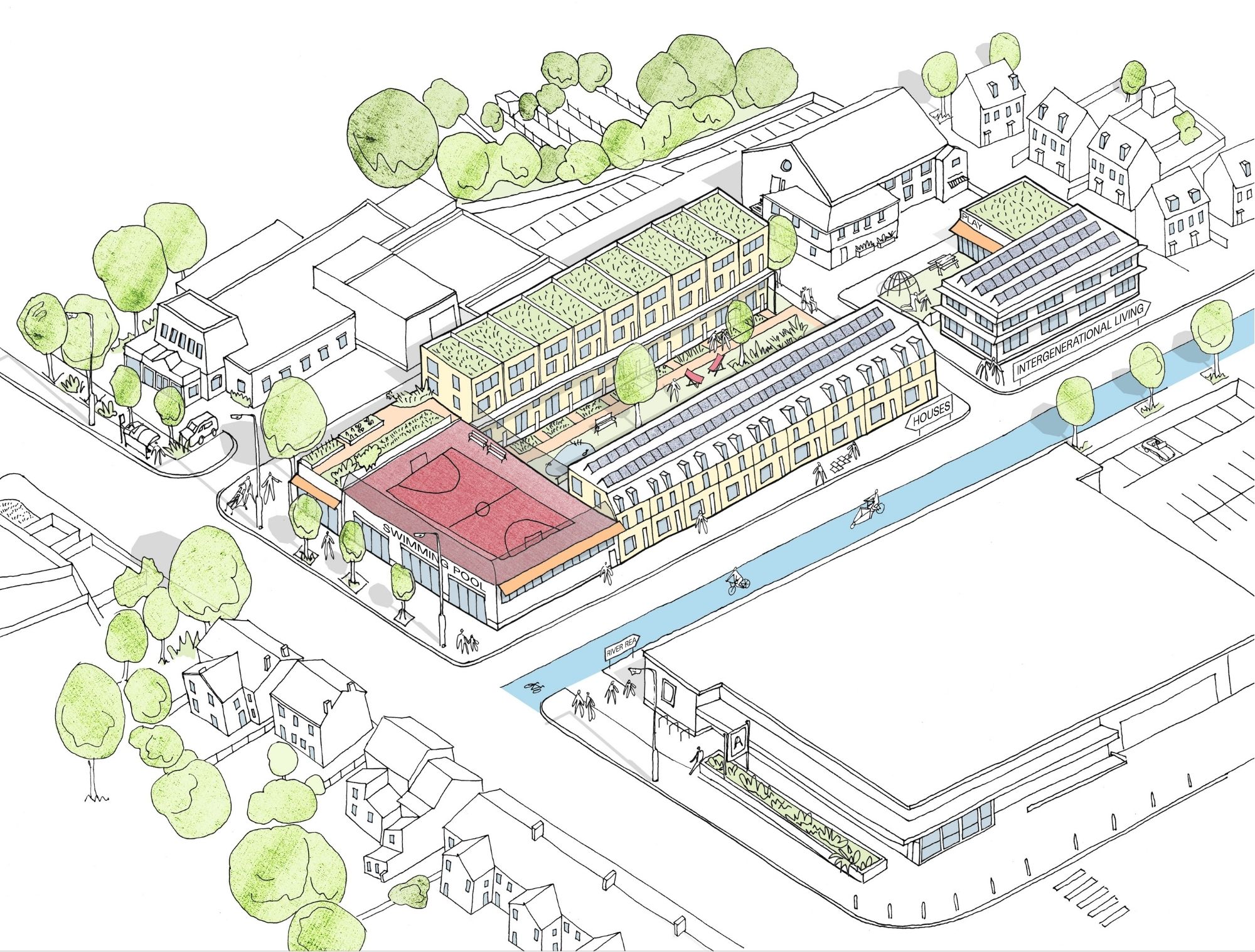
The emerging community plan explores the potential for a community-owned development that could include:
- Inter-generational living, including homes suitable for older residents
- Community-owned retail and leisure spaces
- Ecological and sustainable design
This is an early proposal shaped by local residents, and we’re continuing to develop it through community participation.
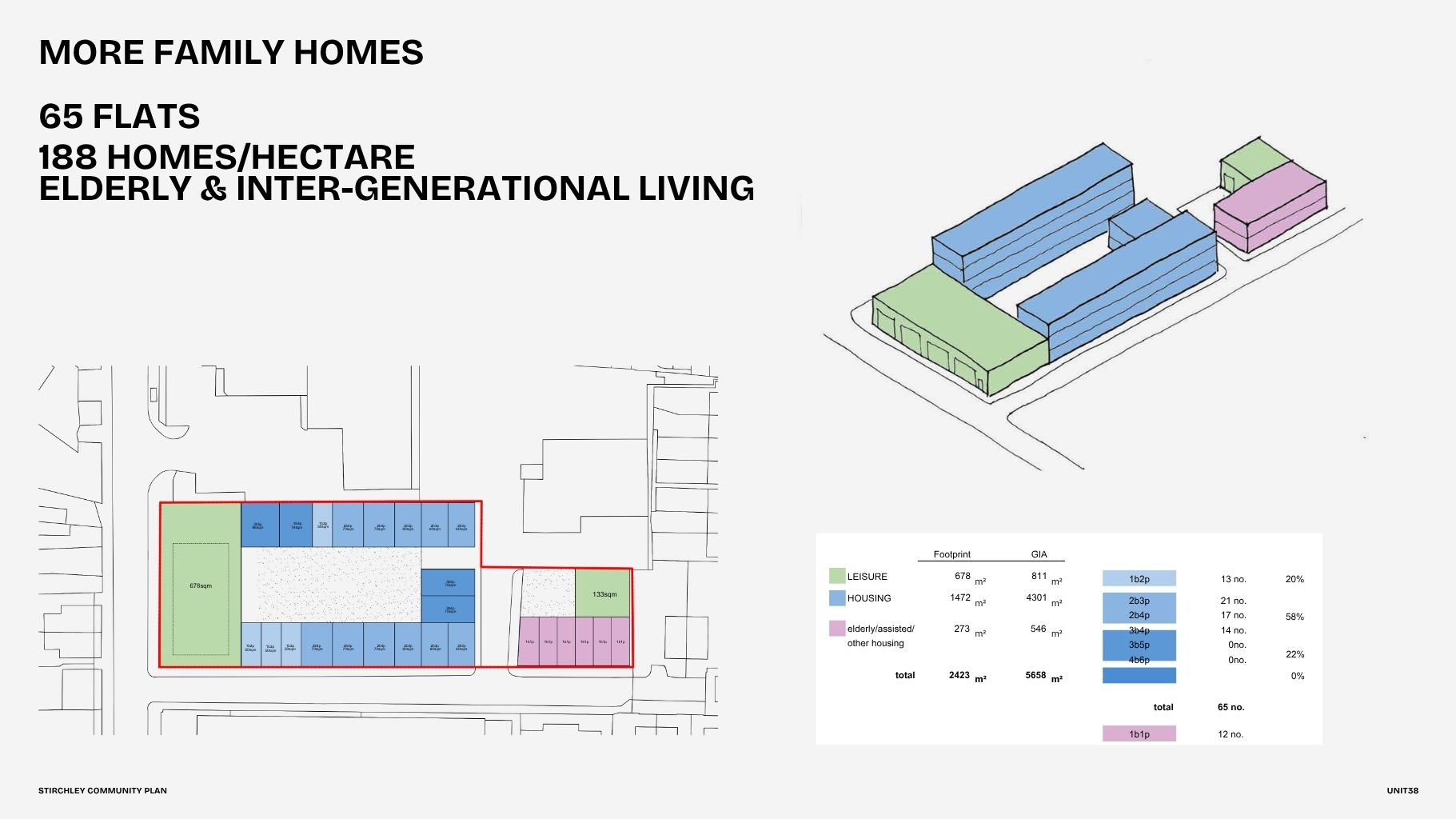
60 homes, designed for families
Generous ceiling heights and the potential for mezzanine levels mean families get flexible, adaptable living space. The northern building rises to four storeys, giving enough homes on the site without sacrificing space inside. There is a lower block at three stories which allows light into the courtyard area. Homes are dual aspect which means natural air cooling in the flats.
The northern block set back from the rises to four stories, enabling a density which makes the scheme affordable and makes use of the Funeral care depot and carpark directly to the north which don’t have shading concerns. Closer to the club is a play area and a block specifically intended for inter-generational living.
A courtyard that gets used
At the centre of the development is a car-free, courtyard garden. The surrounding buildings are deliberately designed to protect the sunlight that reaches it. Shared outdoor space that people actually want to spend time in is one of the most valuable things a housing development can offer, we’ve made it a priority.
There is also room for a small climbing frame close to the club enabling both residents and families using the Stirchley United club a chance to play outside.
Built simply, built affordably
The simpler the structure, the more likely it can be built in timber rather than steel or concrete, better for the environment, cheaper to build, and cheaper to maintain. Every design decision has been tested against this principle.
The single-storey leisure building at the front of the site keeps things structurally clean; its roof becomes a small sports pitch and community garden, with solar panels to keep running costs down. There is a setback bringing the street scene inline with the neighbouring Co-operative funeral home and Aldi store.
A street for people and bikes
The road through the site will be narrowed, level-surfaced, and car-free. Currently it is largely empty and sees a build up of fly-tipping. It should provide a welcoming entrance to the Stirchley United Club, but not be overbearing.
Tenancies will not include car parking, cargo bike parking for residents will be available instead. This frees up more space for the courtyard, makes the street safer, and connects active travel directly down to the cycle route on the River Rea.
Participatory Planning
The Stirchley Community Plan was a collaborative planning process which ran in Autumn 2025 to develop on the community anger against McDonald’s proposal for a drive through on land retained by Aldi after their supermarket was completed on the adjacent site.
Community Led Housing and Leisure in the Heart of Stirchley
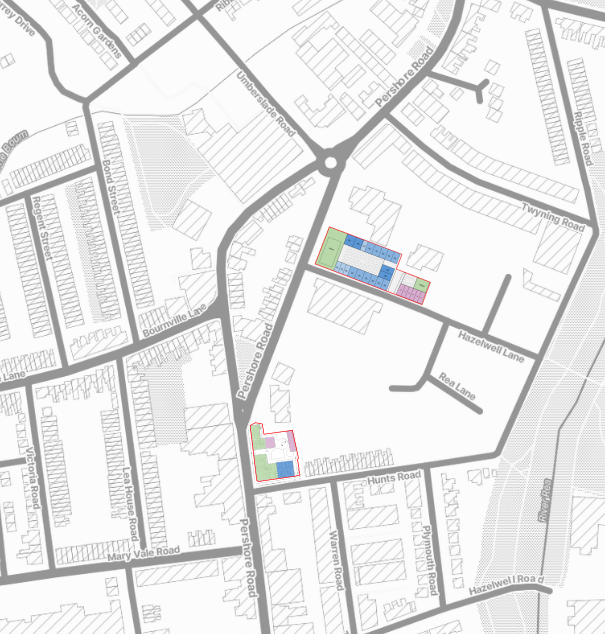
The Stirchley Community Plan sets out a community-led vision for the future of the brownfield site on the high street in Stirchley. Sixty family homes sit above community-owned retail and leisure spaces, preserving green space and creating a car-free courtyard garden. Key ambitions for the community plan were defined through a participatory process. Three sessions led the community through the development process.
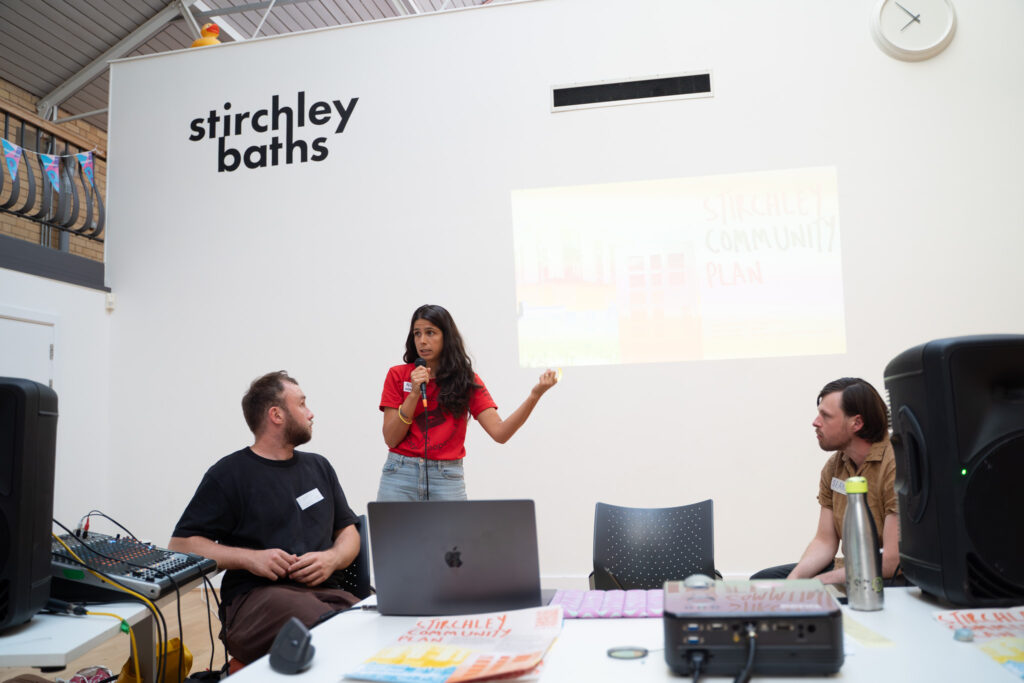
Session 1: We hosted Nina Turull Puig – Project Engineer at Sostre Civic in Barcelona who develop housing co-operatives there, to explain about processes around starting new co-operatives that Sostre Civic have developed. Local residents then split into groups to identify things lost in Stirchley’s past and things they would want restored in future. There was a particular focus on leisure facilities as there was unanimous support for more social rent housing of the sort already being created at Stirchley Co-operative Development.
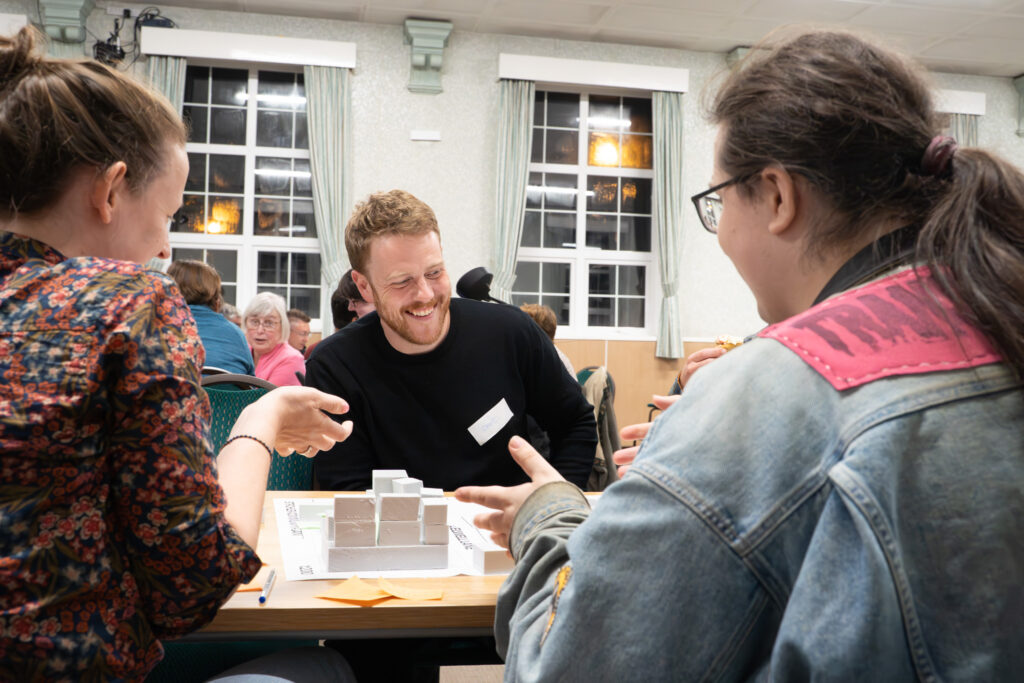
Session 2: Participants used foam blocks to model the ‘massing’ of the proposed development on the site. This helped develop and understanding of the site specific factors such as the interrelation any development on the site would have with the Stirchley United club (something McDonald’s did not do).
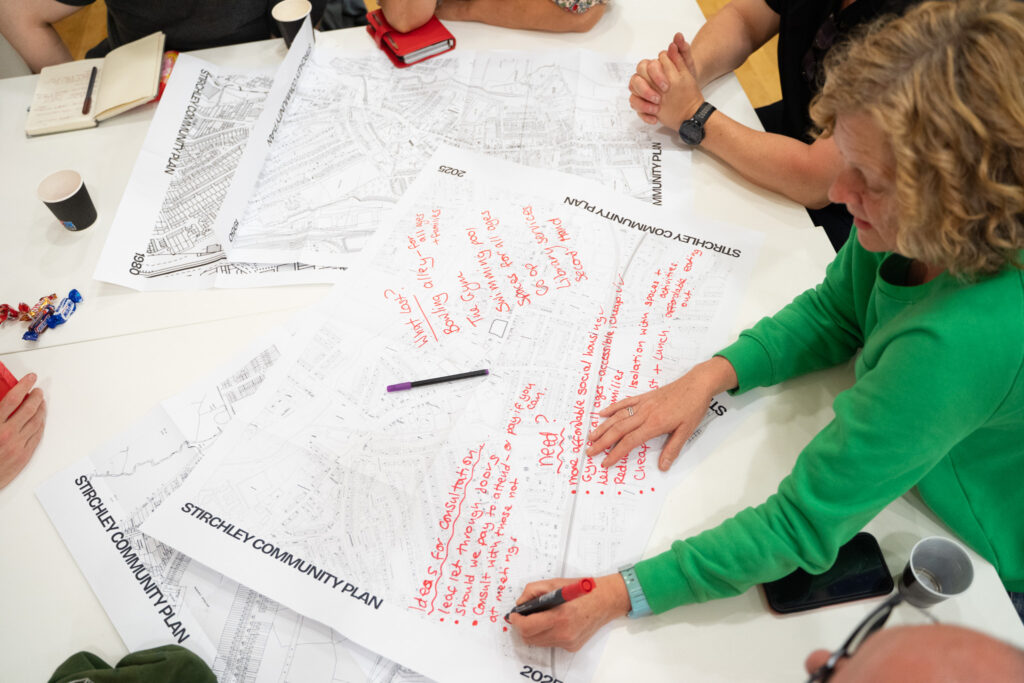
Session 3: Participants discussed co-operative ownership models and funding, to understand how this scheme could be pushed forward and responded to Unit38’s proposals around potential costings which were made possible by the buildings proposed in the previous session.
Building the Vision
Unit38 have helped the group explore the financial viability of the site, options for future operations and the wider strategy to bring the site into community ownership. The next step is for stakeholders, such as Stirchley Co-operative Development, the municipalities of Birmingham City Council and WMCA who support Community Led Housing, Aldi, and also future residents and facility users to push forward the idea and look to see how this land could be developed for community wealth not private profit.